 Red wine
 White wine
 Rosé wine
 Primeurs
 Sherry and Port wine
 Sweet wine
 Orange wine
 Vermouth
 Champagne
 Cava
Cava Prosecco
 Lambrusco
 Crémant
 Moscato d'Asti
 Franciacorta
 Pet-Nat
 Corpinnat
 Other sparkling wines
 Rhum
Rhum Gin
Gin Whisky
 Vodka
Vodka Cognac
 Brandy
 Pastis
 Tequila
 Mezcal
 Grappa and Eau de vie
 Calvados
 Liqueurs
 Pacharán
 Apéritifs
 Wine gift boxes
 Boxed wines
 Boxed sparkling wines
 Wine bottles and glasses
 Gift card
 Non alcoholic Wine
 Non alcoholic Sparkling wine
 Non alcoholic Gin
 Other non-alcoholic drinks
 Aromas
 Wine conservation
 Decanters and aerators
 Bottle identifiers
 Corkscrews
 Service
 Glass identifiers
 Cleaners
 Accessories set
 Wine glasses
 Contact

How to know if a wine is fit for ageing
Some of the questions most frequently asked by our customers are to do with the recommended length of time to keep a wine for.
Does this wine have good ageing potential? Will this wine continue improving with time? Is this wine at its optimum moment of consumption? These are some of the most repeated questions, and their answers depend on many factors. In this post we will try and shed some light on this matter.
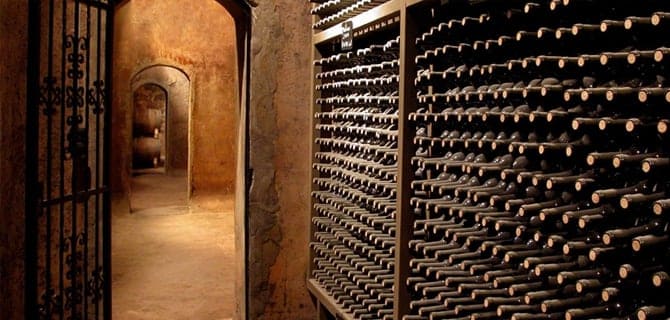
It’s imperative that you clearly know the objective of keeping a wine: It’s a process in which the passing of time allows a “hard” wine to soften, refine and harmonize, despite already being of a high quality, allowing the wine to acquire tertiary aromas that significantly increase its quality.
Based on this precept we have put together some basic points to take into account when trying to work out if a wine has good ageing potential:
1- They are always very high quality wines (and unfortunately, in general expensive as well). Some of the most famous Spanish wines for ageing are worth several hundred euros, like L’Ermita for example, the sought-after jewel of Priorat.
2- They are always “hard” wines, with a lot of structure. By structure we mean the “framework” of the wine, in other words, acidity, tannins and alcohol.
3- We should only keep wines that will continue to improve in the future. Not all wines and not all varieties continue improving once they leave the winery, and in any case, Crianza wines can be aged for 6-8 years, 10-15 for Reserva wines and up to 20-25 years for Gran Reserva wines. After this timescale, the evolution of the wine will stagnate, and it will start to decline.
So, how do we know if a wine has the characteristics fit for ageing?
To answer this question we must pay attention to the two basic cornerstones of wine production: The quality of the grape, and the technique of the winemaking process.
With regards to the fruit, there are certain grape varieties which are more appropriate than others for making wines for ageing. A grape traditionally used in wines for ageing is Cabernet Sauvignon, or Merlot.
In Spain the grape normally used to make wines for ageing is Tempranillo, since it has a good acidity/tannin/acohol ratio. Even so, many of the Gran Reservas of Rioja contain a percentage of Graciano (which brings an extra acidity) and Mazuela (an extra dose of colour extraction). Others, for example the excellent Muga Prado Enea, even contain a bit of Grenache, which helps reinforce the sugars and fruity aromas.
The vintage can also give clues as to whether a wine is suitable for ageing. The drier vintages, characterized by vines with low yields, and thus, with a greater concentration of sugars and aromas, are favourable for producing a wine with good ageing potential.
Likewise, the geographical origin of the wine can also indicate if a wine is suitable for ageing or not. In Spain, the most ideal areas for producing a wine for ageing are found in the North of the country, because the lower temperatures provide higher levels of acidity in the grape.
And finally, the essential part in making great wines for ageing is following the best process for making the grape into wine.
Some perfect Tempranillo grapes don’t result in wines fit for ageing if the wine producer doesn’t follow the steps necessary to make this type of wine. Likewise, right from the vineyard the same wine producer can influence whether a grape is fit for making wine for ageing, for example lowering production (cutting green bunches) of the vines, with the aim of increasing the concentration of elements in the grape.
Once in the winery, in order to produce wines for ageing, the grapes must be given more time in contact with their skins in order to improve the extraction of colour, aromas and tannins, the factor that produces this “hardness” when these wines are young.
Likewise, long ageing in oak barrels also brings complexity to the wine and increases the chances of the wine improving with time.
Remember that a sucessful winemaking process of a wine fit for ageing depends on the constant temperature and humidity conditions.
That said, the only thing left to do now is recommend three of our favourite wines for ageing. Make space in your cellar for these three titans:
Las Lamas: One of the large plots that Ricardo Pérez Palacios cultivates in the town of Corullón, Bierzo. Very old Mencias planted on a steep slope of slate soil with some clay, capable of retaining a little more water and giving more structure to the future wine. The preparation is done in the most classic way, respecting the grapes at all times and leaving them to stand in barrels for a length of time so that they stabilize naturally.
Peñas Aladas Gran Reserva: Dominio del Águila contains all the ingredients needed to make it one of the great wineries in Ribera De Duero. The old vineyards, like this Peñas Aladas, which is over 85 years old, and a classic preparation, emulating the great Maisons of France, result in wines with a great aging potential.
Rioja Alta 890 Gran Reserva: One of those great gems that long aging in barrels produces. Rioja Alta is one of the standard-bearers of this style of wine, refined in the cellar with 72 months in the barrel and ready to withstand many years in the bottle. A world-class Rioja, where tertiary aromas are the predominant ones.